Workshops
Workshop Trainers
Hosting a Workshop
Exploring Nonviolence: Tools for Managing Conflict in Everyday Life
Join us in this interactive, nonjudgmental introductory workshop to explore the power and potential of nonviolence in ourselves and in the world. Explore with others in community to:
- Learn what Nonviolence means; examine our current beliefs and practices regarding violence and nonviolence;
- Practice exploring aspects of ourselves that can spark reactions in others;
- Study techniques of de-escalation;
- Bolster your resilience and ability to deal with violence.
We offer this workshop to groups of 9-16 people at no cost. This workshop is a volunteer effort to cultivate a wider understanding of nonviolence in our community, led by Buddhist teacher Don Handrick, educator Carrie Cannella, retired physicist Dave Bazell, and retired SF Firefighter Ramos Tsosie.
Our current workshops are being conducted with the kind assistance of the Santa Fe Public Library. If you are interested in attending a workshop session, please visit their events page to register: https://www.santafelibrary.org/events/upcoming?keywords=exploring%20nonviolence
If you have any questions about the Exploring Nonviolence workshops, please contact us at <NonviolentSantaFe@Yahoo.com>
See what workshops are scheduled on the ILA Calendar.
Our Current Team of Presenters:
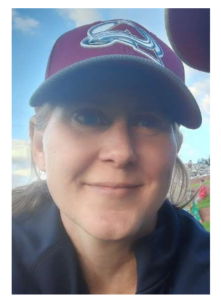
Carrie M. Cannella (She/her) works as a literacy coordinator for an organization providing professional learning and support for New Mexico’s adult education and literacy programs. She believes in the right to literacy, which is directly tied to the improved well-being of individuals, families, and communities. She is a long-time English teacher, writer, and editor, and one of her areas of focus is wellness in the workplace, including conflict management. She is an advocate for universal human rights and has volunteered for various organizations, including those working toward gun violence prevention. Carrie first grew interested in nonviolence through that work and her involvement in Unitarian Universalism, whose principles are consistent with nonviolence teachings.
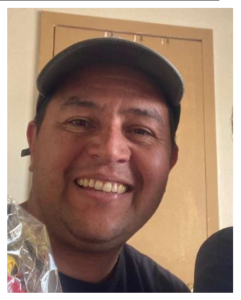
Ramos Tsosie (He/him) is a paramedic with 28 years of experience that was dramatically changed in 2011 after being trained in Nonviolent Communication as outlined by Marshall Rosenberg. Ramos’ approach to healthcare and public safety have been deeply affected by non- violent action. He assisted in the rollout of Santa Fe’s “Alternative Response Unit” which is designed to add another tool to the public safety toolbox that is founded on the principles of Unconditional Positive Regard, Harm Reduction and Case Management. Ramos has found that nonviolent skills are essential to preventing scenes from escalating towards violence as well as de-escalating situations that public safety personnel are asked to address.
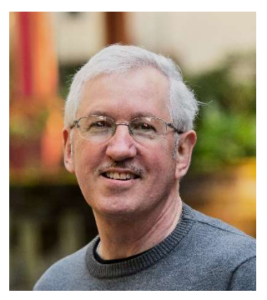
Don Handrick (He/him) has been a student and practitioner of Tibetan Buddhism since 1993 and is also a teacher for the FPMT (Foundation for the Preservation of the Mahayana Tradition) and a former resident teacher at Thubten Norbu Ling Buddhist Center in Santa Fe. One of the first teachings that drew Don to Buddhism was the concept of fostering compassion for all beings which is grounded in the ancient Indian principle of ahimsa, or non-harmfulness. Don frequently teaches on the Buddhist methods to lessen anger and resentment through the cultivation of patience and acceptance in the face of life’s challenges.
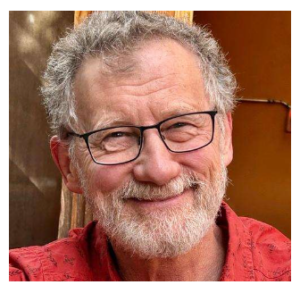
Dave Bazell (He/him) is a retired physicist who moved to Santa Fe from Maryland in 2022. Dave became interested in the study of nonviolence after reading a biography of John Lewis, the late representative and civil rights activist. Since then, he has been reading widely about nonviolent practitioners and different approaches to nonviolence, as well as taking a number of nonviolence trainings. One lesson he has learned is in order to practice nonviolence toward society and the Earth, it is first necessary to practice nonviolence toward oneself and those you come in contact with each day.
Hosting a Workshop
We are looking for willing partners who would like to host this workshop. If you are interested in hosting, please contact us at: NonviolentSantaFe@Yahoo.com.
What hosts will need to provide for the workshop:
- An indoor space at least 18’x’18’, 10-20 chairs that can be arranged in a circle, and an open wall space in the room measuring at least 6’x4’
- A minimum of 9 participants;
- A restroom available for use by participants;
- A designated site host responsible for the space;
- Typically at least a month in advance to schedule the date and time; and
- Publicizing the workshop to your community.
What we will provide for the workshop:
- A site visit by the facilitators to review the space in advance of the workshop;
- A PDF and JPG file with a flier for the host to use to publicize the workshop;
- Optional publicity on the NSF website;
- Managing registrations for the workshop and communicating with participants;
- All materials needed for the actual workshop;
- A minimum of two experienced presenters to conduct the workshop; and
- Administering the evaluation process after the event.